Table of Contents
How I Got Here
Let me back up a little, because getting to rehab meant first surviving the thing that made rehab necessary.
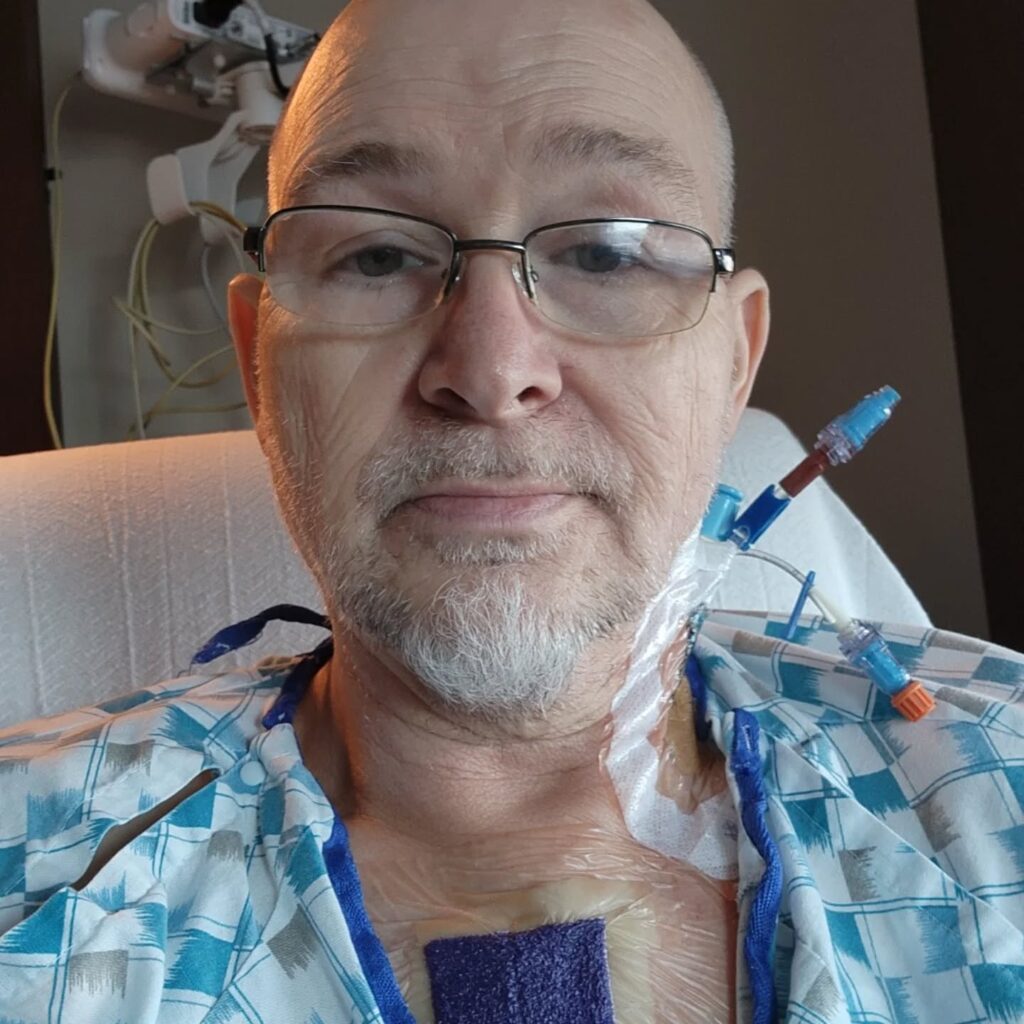
February 13th, 2025. I went in for a stress test. That led to a heart catheterization on the 17th. Two days after that, February 19th, I was on an operating table for open-heart triple bypass surgery.
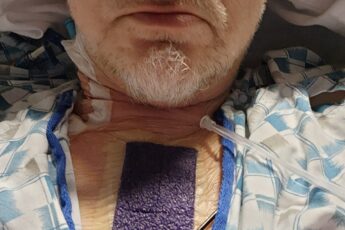
I woke up in the cardiac ICU with a tube down my throat, three chest drainage tubes, IVs running into both arms, and equipment everywhere that I didn’t fully recognize at first. They had me up and walking not long after I came to. My first walk in the hospital barely made it to the nurses’ station. By the time I was discharged that Sunday — five days after surgery — I was doing full laps around the floor.
That was the start of getting myself back. Slow. But it was a start.
What I Couldn’t Do
Sometime in those early weeks at home, I asked my son to grab me a half gallon of ice cream. When he brought it over, I couldn’t scoop it. Didn’t have the grip. Didn’t have the strength in my arms. He had to do it for me.
That was humbling in a way I didn’t expect. I’d just survived open-heart surgery. But I couldn’t scoop ice cream.
It made every small gain in rehab feel like something real.
First Day
Monday, April 14th was my first official day of cardiac rehab. I was nervous. I didn’t take any pictures inside — wasn’t comfortable enough yet, and honestly wasn’t sure if they even allowed it. But I did get a shot outside before walking in. That felt like enough for that day.
I was eight weeks post-op. I’d been doing some light exercises at home, but this was different. Walking through those hospital doors carrying an electrode patch and a folder of paperwork felt like the beginning of something I wasn’t sure I was ready for.
What a Session Actually Looks Like
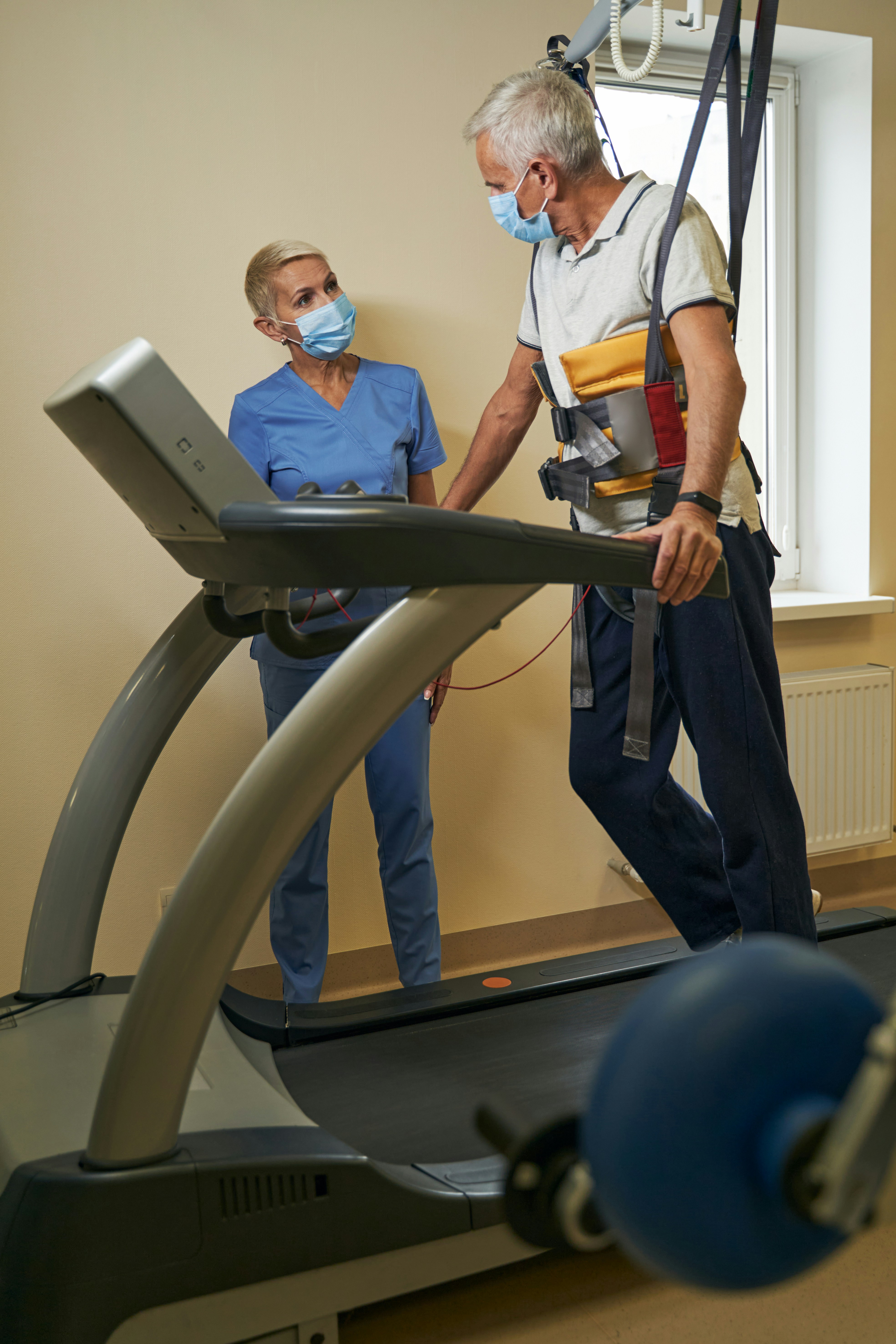
Each session runs about an hour. When I arrive, a nurse hooks me up to a heart monitor with electrodes on my chest, then takes my blood pressure. Once I’m cleared, we go.
The routine: warm-up stretches, then the treadmill, then the arm ergometer — three minutes forward, three minutes reverse — then the stepper machine, which burns my quads every single time, and then back to the treadmill to finish. After that, blood pressure check again, cool-down stretches, and if my heart rate is back in the safe zone, I’m cleared to go. If it’s still elevated, I sit until it comes down.
I went three times a week — Monday, Tuesday, and Wednesday mornings. On off days I kept moving with walks around the neighborhood and some guided exercises I found online.

Where I Started
My first day on the treadmill I was doing six minutes at 1.5 miles per hour. That’s slow. That’s really slow. But it was what my body had that day, and I wasn’t about to pretend otherwise.
Five weeks in, I was up to ten minutes on each machine, 3.2 mph on the treadmill, 1,200 reps on the arm ergometer, and three full laps on the stepper instead of barely one. Every Thursday the staff raised the goals. I never knew by how much until I showed up. I learned to just roll with it.
That progression — from six minutes at 1.5 to where I was five weeks later — felt like getting pieces of myself back one session at a time.
What It Did for My Head
I didn’t expect the mental side of it. Nobody really warned me about that part.
The anxiety that followed surgery was real. The fog was real. There were days in those early weeks where I wasn’t sure what I was feeling or why. Getting into rehab and getting my body moving again changed something. It didn’t fix everything, but it helped in a way I hadn’t anticipated.
Showing up three mornings a week gave me structure. It gave me something to work toward. That mattered more than I expected it to.

How It Ended
I was almost finished. Almost at the finish line.
Then my insurance got canceled. They stopped paying, and the out-of-pocket cost made continuing impossible. So I stopped — not because I chose to, not because I’d graduated, but because the system that was supposed to support recovery pulled the rug out.
Only about 19 to 34 percent of people who should go through cardiac rehab actually complete it. I used to think that was because people quit. Now I’m not so sure. Sometimes it’s not about willpower. Sometimes the cost or the coverage just runs out, and that’s the end of the story whether you’re ready or not.
I’m still moving. Still walking. Still doing what I can at home with the videos I found. It’s not the same as having monitors and staff and a structured program. But it’s what I’ve got.
What I Learned
I learned that showing up is harder than it sounds when your body has been through what mine has. I learned that progress in recovery is real and measurable, even when it feels invisible. And I learned that the system doesn’t always let you finish what you started — and that’s not a personal failure, even when it feels like one.
I’m still here. Still rebuilding. This is just part of what that looks like.



Leave a Comment