Key Takeaways
-
I learned that fatigue, vertigo, and irregular heartbeats can feel manageable right up until they aren't — I almost convinced myself everything was fine.
-
I learned that a smartwatch isn't foolproof, but having those 30-second recordings gave me something real to show the doctors when I finally got in front of one.
- I learned that navigating insurance restrictions and appointment delays when you actually need care is its own battle — and that pushing for answers matters.
- I learned that things can move shockingly fast — a routine stress test on a Thursday became open heart surgery the following Wednesday.
- I learned that recovery isn't just physical. Missing weeks of work as a single-income household has consequences that don't pause because you're healing.
Table of Contents
Something Felt Wrong
I haven’t seen a doctor in probably 30 years. Not an exaggeration. You could count those visits on one hand and still have fingers left over. So when things started feeling off in October of 2024, my first instinct wasn’t to make an appointment. It was to ignore it and push through.
That almost killed me.
It started subtle. Fatigue that didn’t make sense. Random vertigo. And then these episodes — my heart would suddenly start hammering out of rhythm, and just as fast as it came, it would stop. Gone before I could even figure out what happened.
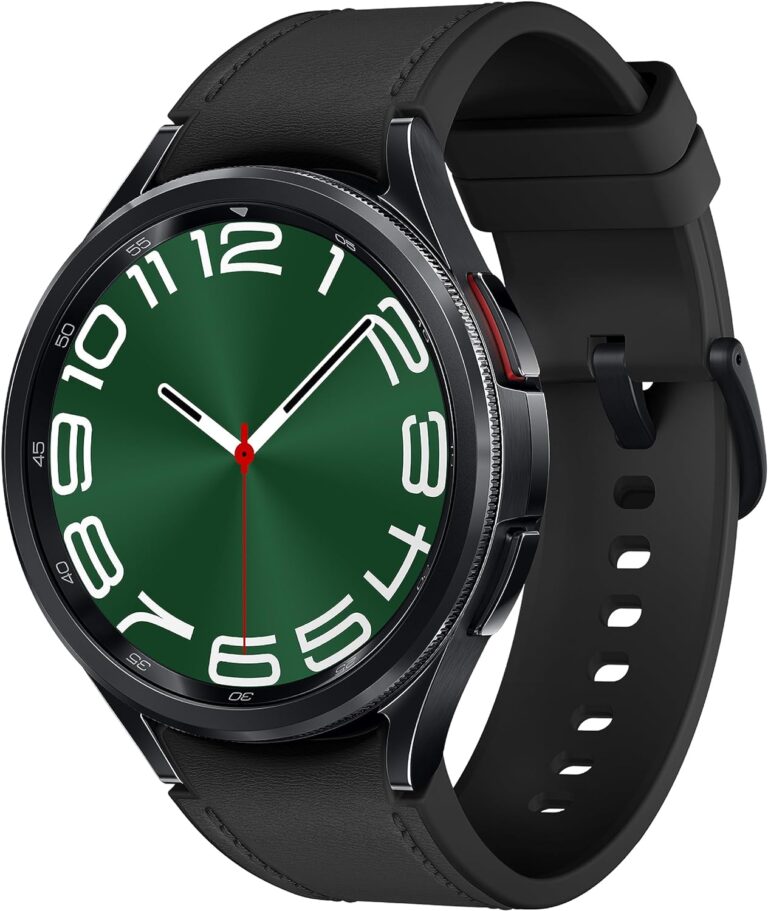
I’d already been wearing a smartwatch as part of the health changes I was working on. Turns out that watch was about to become one of the most important things I owned. I dug into the features and found it could check for irregular heartbeats. The catch — it only automatically flags something if the episode lasts longer than a minute. Mine never did. But there was a manual 30-second check option, so every time I felt an episode coming on, I’d try to get my hand on that watch fast enough to capture it.
A lot of times I couldn’t. My hand wouldn’t stay still enough to get a reading. But I kept trying, because I wanted something to show a doctor. Something real. Something they couldn’t just wave away.
Meanwhile, work was getting hard. I do overnight shifts at Walmart, pick walks through chilled and frozen sections. Those walks are timed. I was starting to time out on the bigger ones. I just didn’t have the energy to move fast enough anymore, and I couldn’t explain why. I knew something was wrong. I just didn’t know how wrong.
Finding a Doctor Was Its Own Battle
Here’s something nobody tells you — trying to find a doctor when you haven’t needed one in decades, with limited insurance options, in a mid-sized Missouri town, is its own ordeal. My work insurance had conflicts with one of the two major medical facilities in the area. That knocked out half my options right there.
I finally found a path forward, but my first available appointment was a month or more out. Then I had a bad episode at work. Chest pain that stopped me cold. The next day — my day off — I went to Urgent Care at the other facility. They ran some tests, found nothing, prescribed something for the vertigo, and set me up with a regular doctor visit down the road. They did say one thing that stuck with me: if the chest pain comes back like that, go straight to the ER.
I filed that away and waited.
When my doctor’s appointment finally came, nothing had changed. Same symptoms. A quick EKG came back clean. But my doctor wasn’t satisfied with that. She scheduled me for a stress test and didn’t leave it open-ended. The appointment was set for February 13th, 2025.
The Stress Test That Changed Everything
February 13th, 2025.
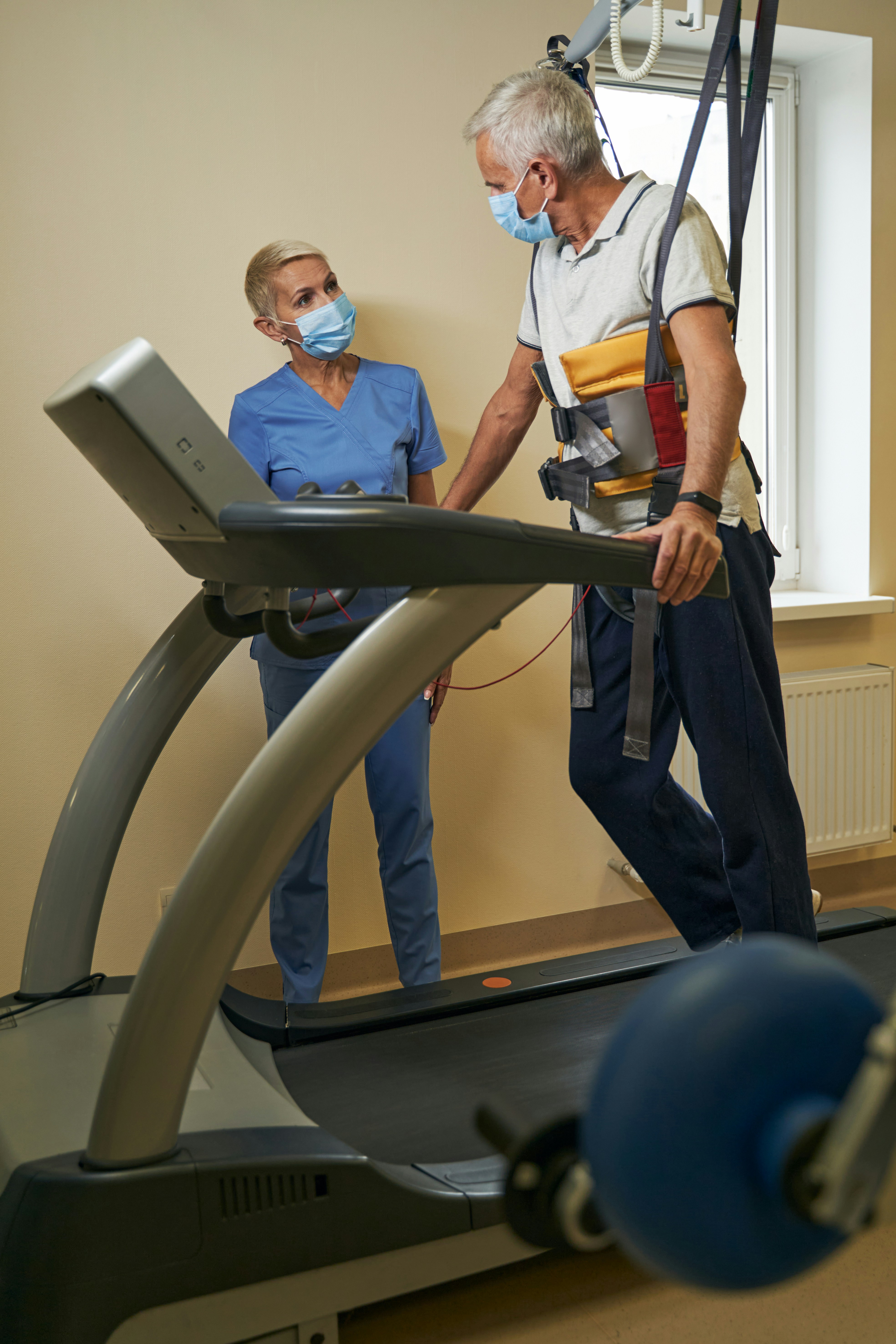
I was nervous walking in. They placed an IV, explained the process — radioactive imaging before and after the treadmill portion to compare how my heart looked at rest versus under load. Then they walked me to the treadmill.
I’m 6 feet tall. The machine felt small. I kept nearly kicking the front panel, and the nurse kept telling me to move forward — closer to the danger zone of falling off the back end. The target was 143 bpm. We worked through the levels, each one a little faster, a little steeper. It felt manageable at first, honestly not unlike a busy night at work. But around 130 bpm it got rough. My body was fighting it. We hit 143. The machine slowed. They had me lay down.
That’s when I noticed the nurse’s expression had changed.
She stepped out. Came back with another nurse. They paged Dr. Retter. He came in, looked at the EKG readout, started asking me questions. Something was clearly going on. My heart rate finally dropped and the chest pain faded, so nobody was rushing me anywhere yet. They completed the second round of imaging.
At some point Dr. Retter had slipped in and looked at the results without me noticing. Then he sat down and told me the imaging showed what looked like blockages. He wanted a heart catheterization done immediately. No work until further notice. He wanted me on the couch until Monday.
I was supposed to work that weekend. Four days of missed shifts I couldn’t afford to miss. But there wasn’t much choice about it.
The Heart Cath
February 17th.
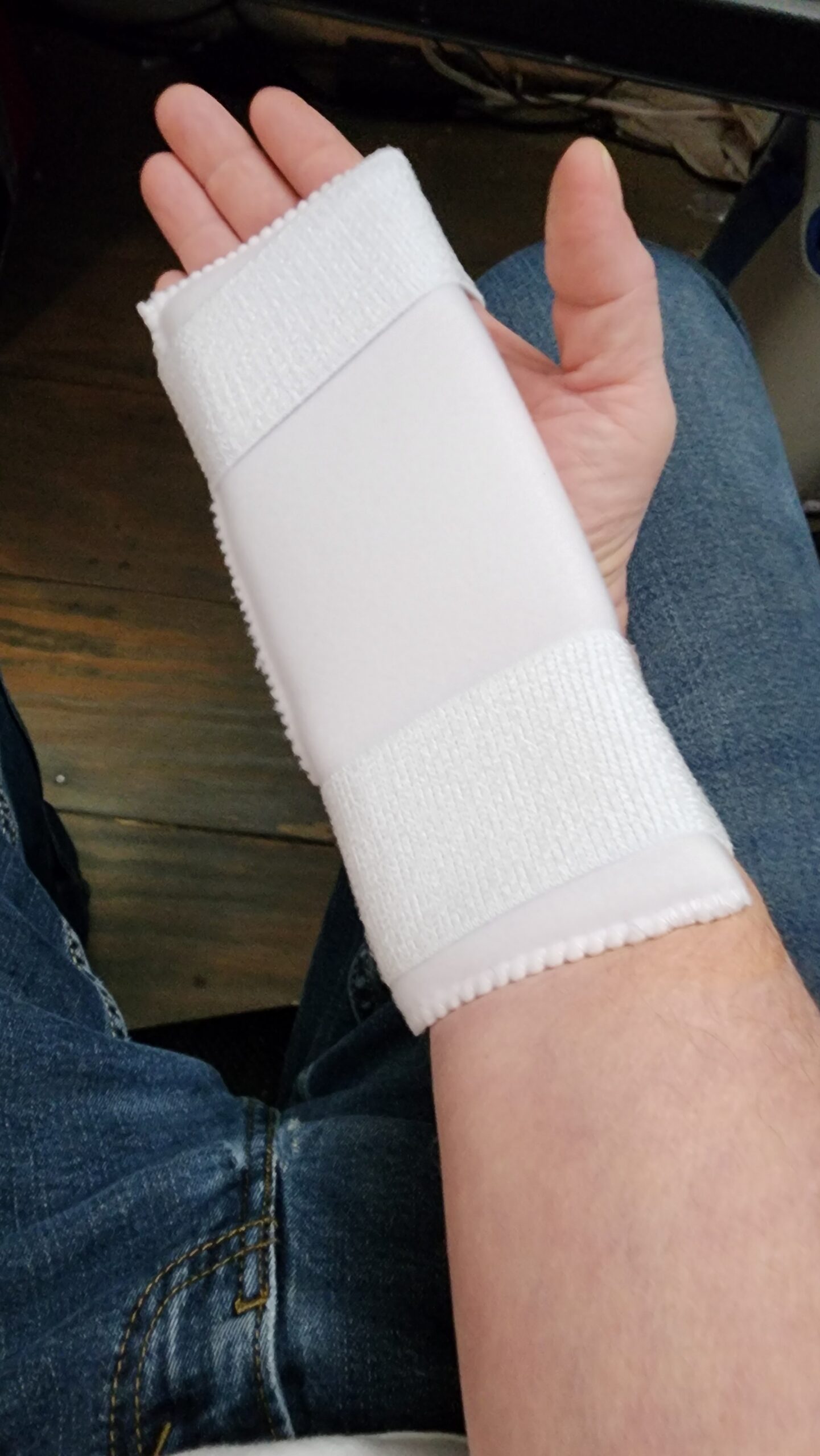
I’d done some reading beforehand. I knew I’d probably be awake for this one, which didn’t thrill me. The operating room was cold. I hate the cold, and I started shaking the second they rolled me in — couldn’t stop. They covered me with hot blankets, leaving only what needed to be exposed. My right arm got taped to the table. The plan was to go through my right wrist, but they prepped my right groin site too, just in case. The nurse who’d been with me appeared on my left side and redid my IV — swapped the short single one out for a long 3-section line. I heard him say he was injecting the sedative.
What actually happened was the sedative worked a little too well — I barely remember anything after they said they were injecting it. I was aware of someone starting on my wrist for maybe a second. Then I woke up in recovery.
Two doctors were standing at the foot of my bed. The original doctor and a new one, a surgeon named Dr. Kim. The news wasn’t good. The blockages were too significant for stents. Too much to do angioplasty. The only real fix was open heart surgery — a triple bypass — and they wanted to do it as soon as possible.
I went in thinking I might have AFIB. I came out being told someone needed to crack my chest open.
Open Heart Surgery
February 19th.
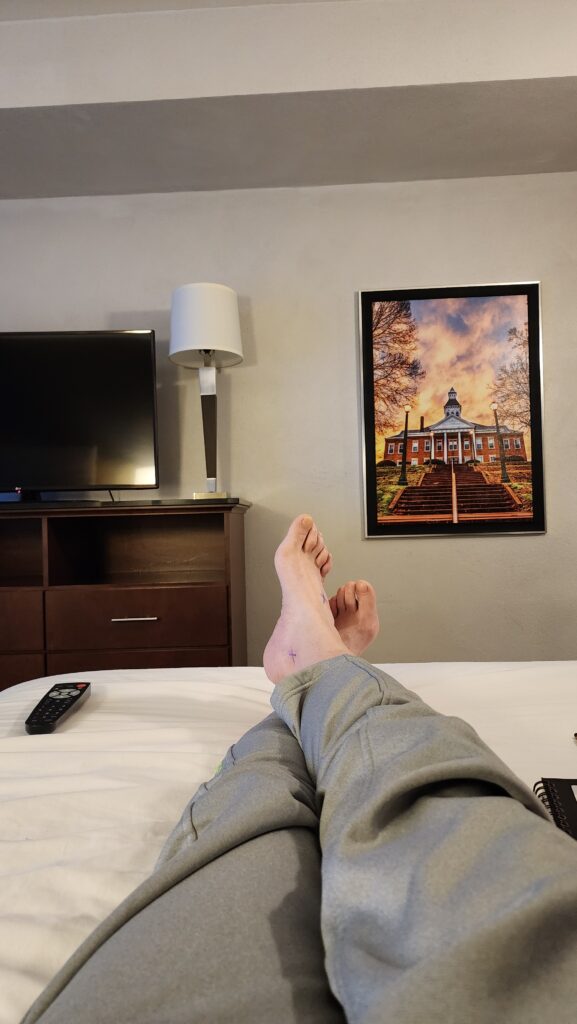
One of my daughters rented a hotel room for her, my son and me to stay in the night before. Surgery was originally scheduled first thing — I had to be there by 5:30am. I ended up getting bumped and didn’t need to be there until 7:30, but we were already there early so it didn’t matter much. They were calling for bad weather that night, and they were right about it.
Everything moved fast. Tests, prep, getting changed, getting shaved — and I mean nearly everywhere, though they left some oddly random patches that I could have handled myself at home if they’d warned me. I barely remember the first IV going in. I don’t remember the operating room at all.


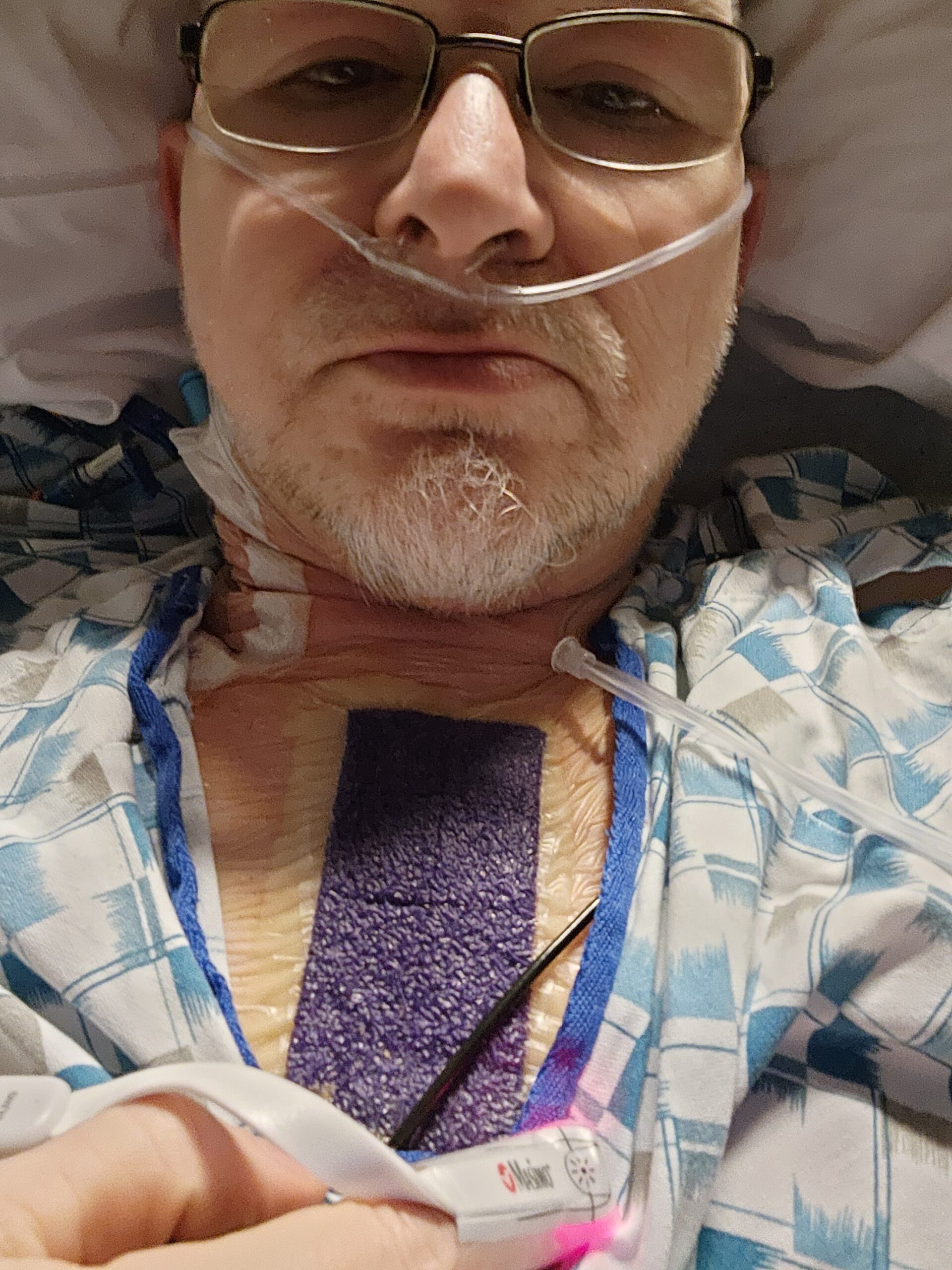
I woke up in the cardiac ICU with a tube down my throat, and let me tell you – that is not a pleasant way to wake up. Every instinct says fight it. It took everything I had not to. Thankfully, they pulled it pretty quickly after I came around.
Once I could actually take stock of the situation, I was hooked up to a lot. Three chest drainage tubes coming out from under my ribs. A neck IV, IVs in both arms. A foley catheter – and I’m honestly just grateful they waited until I was out for that one. A large suction bandage running the full length of my chest over the incision. I think there was a tube in my nose too. It was a lot to wake up to.
Finding My Way Back
They had me up and walking around the CICU not long after I woke up, which felt insane but apparently that’s how it goes. I spent the next few days there before they moved me to a regular room Thursday night. That room would be home for four more days.
Sleep was rough. Breathing treatments, circulation checks, inflatable bags on my legs cycling through all night. But slowly things improved. My first walk barely made it to the nurses’ station. Then I was making it to the large balcony at the end of the hall. Then full laps around the floor. One thing nobody warns you about is the bathroom situation. Still hooked up to everything, you had to wait for someone to come unhook you before you could go. There were a few times I was genuinely worried I wasn’t going to make it waiting for help to get there.
I was released that Sunday. Five days total from surgery to home.
Recovery at home started with one rule above all others: nothing over 10 pounds. A gallon of water is 8 pounds — that’s the benchmark. Walk as much as possible. Rest. Let things heal. The discharge paperwork said 8 to 12 weeks to return to work. I held onto that timeline like it was a promise. It wasn’t. Between the physical recovery, the complications, and a months-long battle with Sedgwick over disability that I wasn’t expecting to fight while I was supposed to be healing — it would be seven months before I was back. That’s a story that deserves its own post, because it was its own fight.

Where I Go From Here
If you’ve been reading this blog for a while, you know I was already working on changing things before any of this happened. Diet, movement, actually taking care of myself for the first time in a long time. Turns out I was still behind. The damage was already there, building quietly for years while I went about my life not seeing doctors and telling myself I was fine.
Missing months of work as a single-income guy has consequences that don’t stop just because you’re recovering from open heart surgery. It touches everything — the bills, the stress, the people depending on you.
What I can say is that I wasn’t doing it alone. My son converted to full-time at work to cover the bills while I couldn’t. Kept me fed, kept the utilities on, kept things running while I focused on just getting better. I raised my kids on my own for a long time. Watching him step up like that when I needed it most — that’s not something I take lightly.
This surgery has also put everything I’ve been building on this blog into sharper focus. The whole point has been improving both my healthspan and my lifespan. I’d seen stats that the average person has about a 15-year lifespan after a surgery like this. I’ve also seen stories of people who’ve gone well past that. I’m not interested in average.
Recovery comes first. Then rehab. Then the rest of the plan — which hasn’t changed, it’s just more urgent now.
Final Thoughts
Looking back, it still amazes me how quickly everything changed. One week I was dealing with symptoms I’d been managing for months. The next week someone had opened my chest.
I’m sharing this because it’s my story, not because I have any expertise in any of this. I’m not a doctor. I’m just a guy who almost waited too long, and who’s now figuring out what comes next.
If you’re the type who puts off doctor visits — and I was the king of that for 30 years — I’m not going to lecture you. I’ll just say that a stress test on a Thursday turned into open heart surgery the following Wednesday.
The rest of the story is still being written.



Leave a Comment