Introduction
I found the Level 10 Life concept in Hal Elrod’s book The Miracle Morning. It’s part productivity method, part self-assessment — a way of looking honestly at the different areas of your life and figuring out where you actually stand versus where you want to be.
The idea is simple enough. You pick the categories that matter in your life, assign each one a rating from 1 to 10, and then sit with the uncomfortable question: why is it there, and what would it take to move it? Those answers become your goals.
I ended up with 13 categories. My own 13, not someone else’s — because the point is for this to reflect your actual life. I’m a bullet journal person, so I drew mine out as a simple bar graph. Most people do it as a circle. Either way, the value is in getting it out of your head and onto paper where you can actually see it and work with it.
What I’ve learned using this process is that vague goals go nowhere. “Get healthier” isn’t a goal. “Walk 10,000 steps five days a week, tracked with my Fitbit, for the next three months” is something I can measure and either do or not do. So I started building what are called SMART goals — Specific, Measurable, Achievable, Relevant, and Time-based. Simple man, simple goals. Nothing extreme.
I reevaluate every quarter. Here’s where things stood when I started, and what I decided to work on in each area.
1. Physical Health
Physical health is the foundation everything else sits on. I learned that the hard way.
For me, this category isn’t just about avoiding sickness — it’s about actually thriving, staying capable, and building a body I can live in well for a long time. The three pillars I keep coming back to are exercise, nutrition, and sleep. Get those three working together and almost everything else improves along with them.
When I started this process my physical health was in rough shape. I’d gained weight, I was exhausted all the time, and I’d been ignoring my body’s signals for years. So this category was the first one I put serious effort into — getting physically healthy not just for now but for the years ahead.
What I’m focused on:
- Low-impact exercise I can sustain — walking, cycling, eventually swimming
- Eating better — building a real way of eating, not just a temporary diet
- Sleep — finally treating it like the priority it actually is

My SMART Goal
Walking:
- S – I will walk 10k+ steps daily, 5 days of the week.
- M – Progress will be tracked through my watch & Samsung Health app.
- A – My job requires me to walk 8+ hours daily.
- R – This goal is important for improving my physical health and fitness. .
- T – I aim to consistently reach 10,000 steps a day for the next three months.
Some Suggested Links:
- Exercise Tips:
- Nutrition Advice:
- Sleep Guidelines:
→ Level 10 Life: Physical Health → Understanding Sleep → My WOE → The Timeless Step
2. Mental Health
Mental health took me a long time to take seriously. Longer than it should have.
I’ve dealt with anxiety and depression most of my adult life. It doesn’t always announce itself loudly — sometimes it’s just a low-level weight that makes everything feel harder than it should be, a fog that dims things. I got good at ignoring it. Working more, sleeping less, staying busy enough that I didn’t have to sit with it.
Anxiety, for me, shows up as a relentless stream of worries and what-ifs — making it hard to focus and stay present. Depression is more like a heavy fog, draining the color out of things I used to enjoy. Neither is easy to explain to someone who hasn’t felt it.
My mother’s dementia is also always in the back of my mind. I’ve read conflicting things about whether it’s hereditary — earlier research suggested it wasn’t, but more recent studies suggest there may be a genetic component. I don’t know where I stand on that. What I do know is that I’d rather spend the next 20 years doing the things that support brain health than wonder later if I should have started sooner.
What I’m working on:
- Daily journaling — getting thoughts out of my head and onto paper
- Mindfulness and meditation — building the daily practice I keep starting and restarting
- Stress management — deep breathing, nature time, leaning into hobbies
- Staying connected — social isolation is a real risk and I’m working against it

My SMART Goal
Journaling:
- S – I will journal 7 days a week, for a minimum of 15 minutes each time.
- M – Success will be journaling each day.
- A – I will set aside 15 minutes in the morning & at night.
- R – Journaling is a beneficial practice for my mental health and self-awareness.
- T – I am committed to this daily journaling practice for the next three months.
To view more of my articles about these subjects you can check out these posts:
- Level 10 Life: Mental Health
- Understanding Dementia
- Understanding Anxiety: Navigating the Storm
- My Journey with Depression: Living in the Shadows
Suggested Links:
3. Spiritual Health
Spiritual health is one of those categories that means something different to everyone, and I think that’s fine. For me it isn’t necessarily about religion in the traditional sense — it’s about connecting with something bigger than the day-to-day, finding meaning, and cultivating some inner peace in a life that doesn’t always offer a lot of quiet.
Honestly, when I first put this category on my list I wasn’t entirely sure what I thought about it or how to define it for myself. I’m still figuring that out. But I know that the times I feel most grounded — most at peace — have something to do with being still, being in nature, and being honest about what I actually believe and value. That’s where I’m starting from.
What I’m working on:
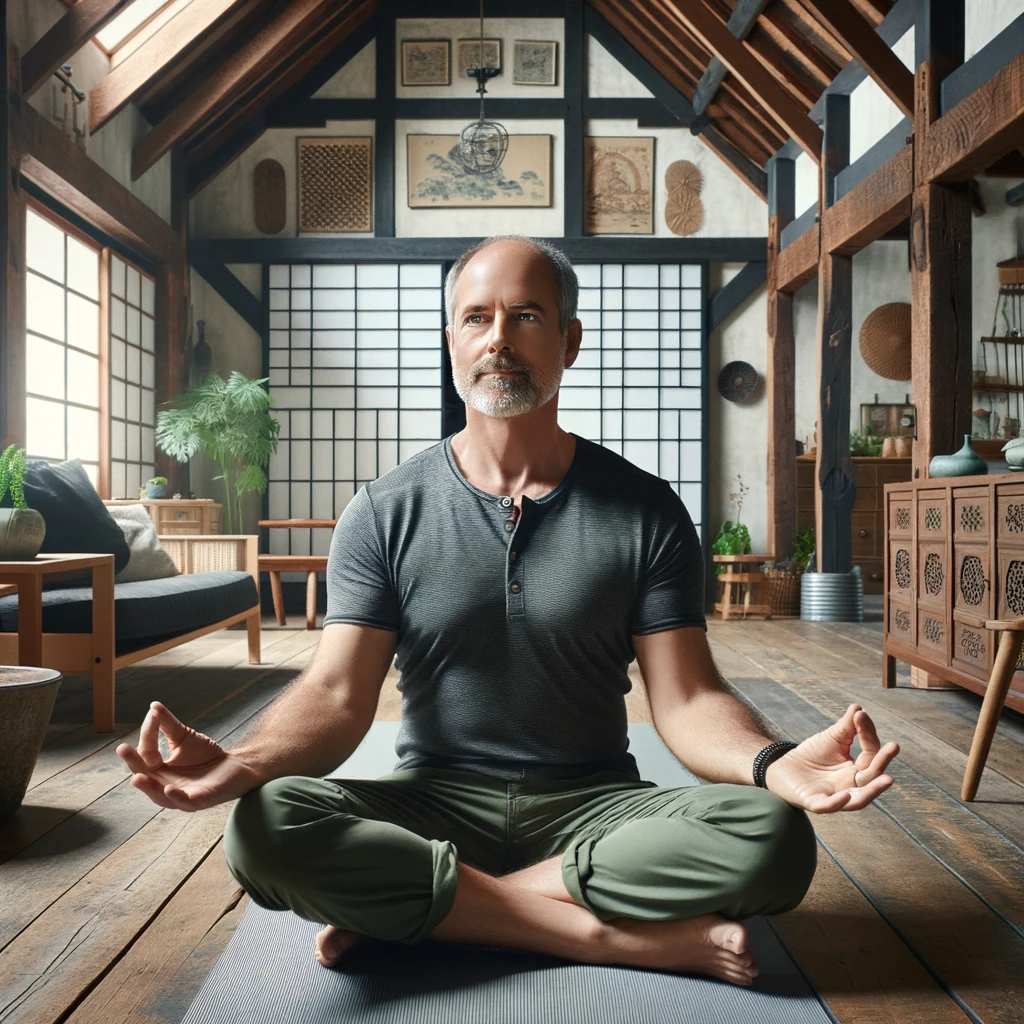
- Daily meditation — dedicating time each morning to quiet reflection
- Spending regular time in nature, disconnected from screens
- Exploring my personal beliefs more intentionally — what I actually think, not just what I’ve assumed
My SMART Goal
Meditating:
- S – I will meditate 7 days a week, for a minimum of 15 minutes each time.
- M – Success will be meditating each day.
- A – I will set aside 15 minutes in the morning & at night.
- R – Meditating is a beneficial practice for my mental health and self-awareness.
- T – I am committed to this daily meditating practice for the next three months.
You can check out some of my posts on this subject here:
- Level 10 Life: Spiritual Health
- “Starting my Spiritual Path After 50: A Journey of Self-Discovery”.(coming soon)
Suggested Links:
4 – 7. Relationships – Romantic, Family, Friends & Community.
I originally had these as four separate categories, and they still are on my actual Level 10 Life layout. I’m grouping them together here mostly for space, but they each pull on me in different ways.
The research on relationships and longevity is pretty consistent — strong social connections are linked to lower rates of heart disease, depression, and cognitive decline, and people with robust relationships tend to live longer. That’s not abstract to me. That’s motivation.
It hurts to admit this, but this is one of the areas where I have the most work to do.
Years of long work hours, stress, and not being truly present even when I was physically there have taken a toll. On every layer of this — romantic, family, friendships, community involvement. These connections don’t maintain themselves and I hadn’t been tending to them the way I should have been.
What I’m working on — Relationships overall:
- Being more intentionally present with the people who matter to me
- Creating an online family memory book to preserve and celebrate our history
- Rebuilding connections I let go quiet
My SMART Goal
Creating an online family memory book:
- S – My goal is to create an online family memory book.
- M – I will measure my progress by setting milestones for the completion of different sections of the memory book.
- A – To make this goal attainable, I’ll allocate specific time each week to work on the memory book.
- R – Creating this memory book is important for preserving family history and strengthening our family bonds.
- T – I will complete the beginning of the online family memory book within the next three months.
8. Fun/Leisure
This one sounds like it should be easy. It wasn’t.
I’d spent so many years in a mode of just getting through things that I’d genuinely lost track of what I did for fun. Not what I used to do. Not what I thought I should enjoy. What actually made me feel good and alive when I was doing it.
There’s a reason fun made the list. It’s not frivolous — it’s a vital part of a balanced life. The research backs it up and so does common sense. People who make space for joy and play are healthier, more resilient, and more engaged with their lives.
For me, I’m working a mix of old interests and new ones back in. I used to draw and paint — I never totally stopped doodling, but I haven’t attempted a real drawing or painting in years. I have the supplies for watercolor, which is something I’ve never seriously tried, so that’s a new experience ahead of me. I also bought an acoustic guitar. My dad had one years ago, my son has it now. I learned a little back then and forgot all of it — so I’m starting over from scratch there too.
Then there’s the blog. That’s a hobby too, even if it’s grown into more than that. It’s writing, research, creative expression, community-building — all wrapped into one thing I actually want to work on.
And down the road I want to get into blacksmithing and woodworking. Since I’m already remodeling the house room by room, I’m getting a taste of the carpentry side of that sooner than expected.
ey on this, maybe even create something of a community for everyone.

My SMART Goal
Creating a drawing:
- S – I will create a pencil drawing that captures a elephant.
- M – I’ll measure my progress by completing specific sections of the drawing in a planned sequence.
- A – Given my current skill level and available resources, I will dedicate a specific time each day to work on this drawing.
- R – Completing this drawing is aligned with my goal of enhancing my artistic skills and expressing my creativity. It’s also a fulfilling and relaxing activity that contributes to my personal growth and well-being.
- T – My target is to complete this drawing in three months. This deadline provides a clear timeframe and helps maintain focus and motivation.
Related reading:
→ Level 10 Life: Fun/Leisure (coming soon)
9. Self-Development & Self-Improvement
Self-improvement is two things running at the same time for me.
On the outside it’s about acquiring new skills and staying capable — keeping up with the changing world, staying relevant and adaptable. On the inside it’s something harder and more important: understanding who I actually am, what I actually value, and whether the life I’m living lines up with those things.
The internal work is the part most people skip. It’s not comfortable. It doesn’t produce an obvious result you can measure or show anyone. But it’s the part that changes how you show up in every other category on this list.
The Level 10 Life process itself is part of my self-development plan. I’ve been doing it for a few years now, though I’ve been inconsistent with it. I plan to do better. Getting honest about the numbers every quarter is more clarifying than almost anything else I’ve tried.
What I’m working on:
- The Level 10 Life quarterly review — staying honest, staying consistent
- Daily journaling as a reflection and self-awareness practice
- Exploring my core values and making sure my choices actually reflect them

My SMART Goal
Learn Spanish:
- S – Achieve conversational level in a new language.
- M – Complete language lessons in the Duolingo mobile app.
- A – Practice daily for 20 minutes.
- R – Enhance communication skills and cultural understanding.
- T – My target is to practice this daily, I do NOT have a finish date on this.
External Resources for Further Exploration:
→ Level 10 Life: Self-Improvement (coming soon)
10. Education/Learning
I never stopped wanting to learn. I just stopped making time for it.
Education and learning have always been important to me — not for career advancement at this point, but for personal fulfillment and keeping my mind sharp. There’s real evidence that continued learning supports cognitive health as we age, and that resonates with me given my concerns about dementia.
Right now I’m working on drawing, painting, guitar, and carpentry as mentioned above. Languages are a big focus too — currently working on Spanish, hoping to eventually add Irish and Japanese. And my primary learning focus is always aging and longevity — understanding the research, understanding my own health, and figuring out what actually works for extending both the length and quality of my life.

My SMART Goal
Goal: To become proficient at playing the guitar.
S: I will learn to play the guitar by focusing on basic chords and strumming patterns.
M: I will measure my progress by the number of chords I can play from memory and the number of songs I can perform.
Achievable: Considering I am a beginner, I will start with 30 minutes of practice each day.
Relevant: Learning to play the guitar aligns with my personal interests in music and self-improvement.
Time-bound: My goal is to achieve this level of proficiency in six months.
Related resources:
→ Level 10 Life: Education/Learning (coming soon)
11. Career
Career looks different in my 50s than I ever expected it to.
I walked away from a job I’d put a lot of myself into — one I’d thought I’d stay in until retirement. Leaving it was the right decision but it still stung. The question of what came next wasn’t just practical, it was personal. What did I actually want to do with the working years I had left?
I found a job that, while it’s a significant pay cut from what I made before, works well for where I am right now. The physical nature of it — on my feet moving all day — actually supports my fitness goals, which matters. But I haven’t let go of the longer-term goal of owning something of my own and being my own boss. The blog is part of that path.
What I’m working on:
- Publishing consistently on the blog — one solid post per month minimum
- Building the blog into something sustainable over time
- Working toward a future where I have more control over my time and income


My SMART Goal
Blog Content Creation:
- S -I will publish one in-depth, high-quality blog post each month, focusing on my main tops Aging, Longevity & a Level 10 Life.
- M – Success will be measured through engagement metrics and blog traffic.
- A – One post monthly is very realistic and manageable for me.
- R – This directly aligns with enhancing my blog and engaging my readers, as well as my own self-improvement of learning through researching about the topics I write about.
- T – I have a clear timeline of 12 months, the entire year of 2024, although I do plan for it to continue much, much longer than that.
Related reading:
→ Level 10 Life: Career (coming soon)
12. Finances
Finances became something I had to rethink completely when I left my job.
In my 50s, managing money isn’t just about day-to-day expenses anymore — it’s about retirement, unexpected costs, and building something sustainable over time. I’d been coasting on a decent income for years without paying close enough attention, and when that income changed suddenly I felt how exposed I was.
My approach now is focused on sustainability and self-sufficiency. Living within my actual budget. Working down debt. Cutting the things I don’t really need. I’ve also started thinking about things like growing my own food and energy independence — not just for environmental reasons but because reducing what I depend on from outside reduces my financial vulnerability too. It’s a different way of thinking about money than I had before.
What I’m working on:
- Building and actually sticking to a monthly budget
- Identifying and eliminating non-essential spending
- Using budgeting tools to track where the money actually goes
- Working toward a 20% reduction in non-essential spending

My SMART Goal
Goal: Improve financial management through frugality and budgeting.
S: Create and adhere to a monthly budget that reduces unnecessary expenses and increases savings.
M: Achieve a 20% reduction in non-essential spending.
A: Identify areas of unnecessary spending (like dining out, subscriptions, or impulse purchases) and replace them with more cost-effective alternatives. Use budgeting tools or apps to track expenses.
R: This goal aligns with the aim of enhancing financial stability and building a savings cushion, leading to long-term financial health and peace of mind.
T: Aim to have the new budgeting system in place and functioning effectively within the next three months. After that, continue with monthly reviews and adjustments.
Related reading:
- 12 Frugal Living Tips to Help You Save More Money
- Your Guide to Budgeting
- 5 Steps to Retirement Planning in 2024
→ Level 10 Life: Finances (coming soon)
13. Home
Home means more to me than just a physical space. It always has.
When my mother passed in January 2023, I inherited my parents’ house. It was built in the 1950s and early 60s — my parents bought it around 2000. Over time things have deteriorated: the flooring I’m currently replacing, old wiring that needs attention, all the things an aging house accumulates. As time and money allow, I’m slowly rebuilding and remodeling it. Not just fixing what’s broken — though there’s plenty of that — but transforming it into a space I actually want to live in, that works for how I live now and how I want to live as I get older.
There’s a plan to age in place here. That shapes every decision I make about what to fix and how.
Personally, for me a home means more to me than just a physical space. It’s a sanctuary. With my mother’s passing in January 2023, I inherited my parents house. The house was built in the 1950s/early 60s, my parents bought it around 2000. Overtime some things have deteriorated, such as the floor which I’m currently replacing. There are other issues, old wiring, etc. So as time and money allows, I’m slowly rebuilding/remodeling the house. I’m fixing issues of an aging house, remodeling it to make it my “Sanctuary” and to make it more functional now and for the future with plans of aging in place.
What I’m working on:
- Decluttering room by room — one space at a time, not all at once
- Replacing the flooring and working through the repair list systematically
- Making the space more comfortable, functional, and genuinely calming
- Planning modifications with aging-in-place in mind
My SMART Goal
Goal: Declutter my living space to create a more organized and peaceful environment.
S: Tackle different areas of my home to reduce clutter, focusing on one room or area at a time, such as the living room, kitchen, bedroom, and so on.
M: Aim to declutter each targeted area completely, deciding on what to keep, discard, donate, or sell. Measure progress by how neat the area is after with everything having its own place.
A: Allocate a manageable amount of time each day for decluttering activities, such as 15 to 30 minutes daily. This will ensures steady progress without overwhelming myself.
R: A decluttered space can lead to a more organized lifestyle, reduce stress, and improve overall well-being. It aligns with the goal of creating a peaceful and efficient living environment.
T: My goal is to complete this process by the end of three months, which will be June 1st, 2024.
You can find more information of what I’m doing to create my “Home” by following these links:
- Level 10 Life: Home(coming soon)
- My Projects(WIP?)
- Transforming my home for retirement living. (coming soon)
- Home safety tips for older adults. (coming soon)
Wrapping It Up
That’s all 13 of them. Physical Health, Mental Health, Spiritual Health, Relationships, Fun, Self-Development, Education/Learning, Career, Finances, and Home — each one a piece of a larger picture I’m trying to see clearly and work on deliberately.
When I first drew this out in my bullet journal I was uncomfortable with a lot of what I saw. The numbers were honest in a way that was hard to sit with. But that discomfort was the point. You can’t fix what you’re pretending isn’t broken.
This isn’t a system I’m saying anyone else needs to follow. I’m a simple man with simple goals and a long list of things to work on. What I can say is that for me, getting all of this out of my head and onto paper — giving it shape I could actually see — was one of the most useful things I’ve done. It changed how I approach my days and what I pay attention to.
Every quarter I sit down and go through it again. Rate each category. Compare it to where I was. Ask what changed and what didn’t. Some areas have moved significantly. Some are stubbornly holding still. All of them are at least honest now.
That’s enough to keep going.
This is my personal experience — not professional advice of any kind.




Leave a Comment